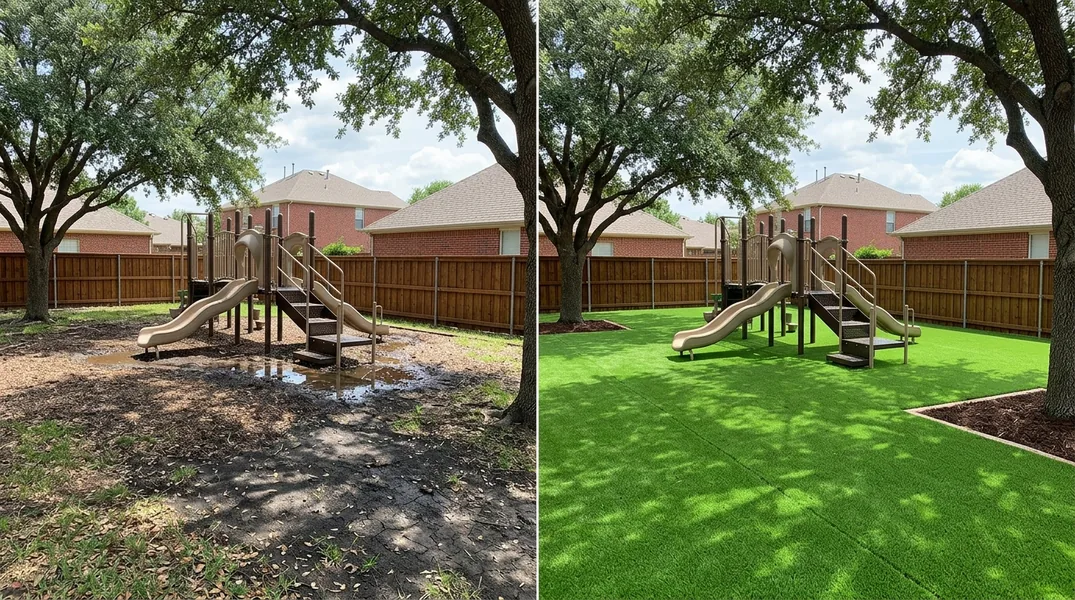
Why Shade Changes Everything in Dallas Landscaping
If you've got a shady yard in Dallas, you already know that traditional lawn care becomes a frustrating uphill battle. The Texas sun is relentless, but ironically, shade is often the biggest challenge homeowners face when trying to maintain a green, healthy yard. Trees that provide relief from the summer heat also block the sunlight that most grass species need to thrive.
The good news is that you have legitimate options beyond struggling with thin, patchy grass year after year. Understanding the differences between artificial turf, St. Augustine grass, and xeriscaping will help you make an informed decision that fits your lifestyle, budget, and long-term goals. Each approach has real advantages and genuine trade-offs, and the right choice depends entirely on your specific situation.
Artificial Grass vs Real Grass: The Core Differences
When comparing Residential Artificial Grass Installation to traditional grass, the distinction goes far beyond appearance. Real grass, whether St. Augustine or another variety, is a living plant that requires water, sunlight, nutrients, and regular maintenance to survive. Artificial grass is a manufactured product designed to look and feel like real turf while eliminating most of the ongoing care requirements.
The most significant advantage of artificial grass in shady areas is that it performs consistently regardless of light conditions. Shade doesn't affect synthetic turf the way it devastates natural grass. Real grass, particularly warm-season varieties like St. Augustine, needs substantial sunlight to photosynthesize and maintain its color and density. In heavy shade, real grass becomes thin, weak, and vulnerable to disease and moss growth. Artificial grass, by contrast, maintains its appearance year-round without fading or thinning, making it an excellent solution for yards with mature trees or northern exposures.
Maintenance differences are equally striking. Real grass demands weekly mowing during growing season, regular watering, fertilizing, aeration, and pest management. Artificial turf requires occasional raking, debris removal, and periodic cleaning, but no mowing, no watering, and no chemical treatments. For busy Dallas homeowners, this difference translates into genuine time and money savings over the life of your landscape.
St. Augustine Grass in Shade: Honest Expectations
St. Augustine is the most common warm-season grass in Texas, and for good reason. It tolerates heat, handles our clay soils reasonably well, and can recover from drought stress better than cool-season alternatives. However, St. Augustine has a significant limitation in shady conditions. This grass variety prefers full sun to partial shade, typically needing at least four to six hours of direct sunlight daily to maintain healthy growth.
In deeper shade, St. Augustine becomes thin and weak, making it vulnerable to fungal diseases like brown patch and take-all root rot, which thrive in the combination of moisture and low light. If your yard has mature oak trees or structures that block most direct sunlight, St. Augustine will struggle. You'll see progressive thinning over one to two seasons, followed by bare patches and increasing moss or weed invasion. Homeowners often respond by increasing watering and fertilizer, which actually makes fungal problems worse in shaded areas.
That said, St. Augustine can work in partial shade situations where trees are high enough to allow dappled light throughout the day. If you're willing to invest in fungicide treatments, improve drainage, and accept that your lawn won't be as thick or vibrant as sun-exposed areas, St. Augustine remains an option. But honest assessment matters: if your shaded area receives fewer than four hours of direct sun, you're fighting nature rather than working with it.
Xeriscaping and Drought Tolerant Landscaping: A Different Philosophy
Xeriscaping represents a completely different approach to landscaping, one that embraces the natural conditions of your yard rather than fighting them. This landscaping philosophy focuses on creating beautiful, functional outdoor spaces using drought tolerant plants, native species, hardscaping elements, and efficient water management. Instead of trying to grow grass in shade, xeriscaping asks: what plants actually thrive in these conditions?
For shaded yards in Dallas, xeriscaping opens creative possibilities. Shade-loving plants like autumn fern, coral bells, liriope, and native Texas ferns create visual interest without demanding full sun. Mulch beds, decorative gravel, stone pathways, and hardscape features like pergolas or raised planters add structure and function. Xeriscaping typically requires less water than traditional lawns, less maintenance once established, and creates a landscape that actually belongs in your specific microclimate rather than fighting against it.
The primary trade-off with xeriscaping is aesthetic. If you strongly prefer the look and feel of a traditional grass lawn, xeriscaping won't provide that. However, modern xeriscaping design has evolved far beyond the stark, sparse look of earlier decades. Contemporary drought tolerant landscaping can be lush, colorful, and inviting. Many homeowners find they prefer the unique character of a well-designed xeriscape to a struggling lawn.
Residential Artificial Grass Installation Near Me: When to Call a Professional
If you're leaning toward Residential Artificial Grass Installation, professional installation makes a substantial difference in long-term performance. DIY artificial grass installation might seem like a cost-saving measure, but improper base preparation, inadequate drainage, and poor seaming can lead to problems like shifting, poor drainage, and premature wear within a few years.
Professional installers understand the specific soil conditions and drainage patterns in Dallas yards. They properly prepare the base using compacted gravel and sand, ensure adequate slope for water runoff, and install quality turf with appropriate infill material. They also handle the technical aspects like seaming, edging, and securing the turf so it remains stable under Dallas heat and occasional heavy rainfall. When you're investing in artificial grass, professional installation ensures your investment lasts 15 to 20 years rather than deteriorating after five or six.
Dallas Turf Installation has extensive experience with residential properties throughout the area. Whether your shaded yard is in a mature neighborhood with established trees or you're building a new landscape, professional installation ensures your artificial grass performs beautifully year-round. If you're ready to explore this option, contact us at (469) 972-5734 or request a free estimate to discuss your specific yard conditions and goals.
Making Your Decision: Turf vs Grass vs Xeriscaping Cost and Lifestyle Factors
Choosing between these three approaches requires honest consideration of your budget, time availability, and aesthetic preferences. Real St. Augustine grass has the lowest upfront cost but highest ongoing maintenance demands and uncertain performance in shade. Xeriscaping requires thoughtful design and initial planning but delivers low maintenance and water savings over time. Artificial grass represents a middle ground: moderate upfront investment with minimal ongoing maintenance.
Consider your lifestyle realistically. If you enjoy yard work and have time for weekly mowing, regular watering, and seasonal maintenance, real grass might align with your preferences despite the shade challenges. If you'd rather spend your weekends relaxing than maintaining your lawn, artificial grass eliminates that burden entirely. If you're interested in creating a unique landscape that reflects Dallas's natural environment while reducing water usage, xeriscaping offers genuine environmental and practical benefits.
Budget matters too. Artificial grass typically costs more upfront than St. Augustine sod, but lower maintenance costs often make up the difference within five to seven years, especially when you factor in water bills, fertilizers, fungicides, and equipment maintenance. Xeriscaping varies widely depending on design complexity and plant selection. For a detailed understanding of artificial grass pricing specific to your project, contact Dallas Turf Installation directly. There's no one-size-fits-all answer, but understanding your own priorities makes the decision clear.
Looking for a professional artificial grass installation company in Dallas? Dallas Turf Installation responds fast for all your artificial grass installation needs.
Get a Free Quote