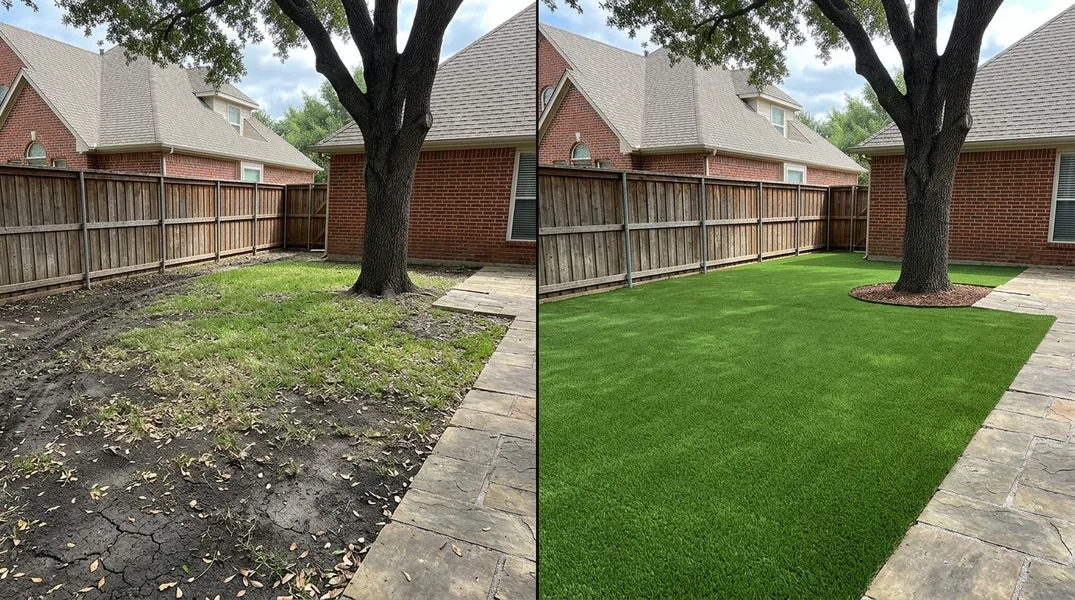
The Hidden Damage: Why Storm-Lifted Edges Happen in Dallas
When a strong storm rolls through Dallas, most homeowners worry about roof damage or fallen branches. But if you've installed artificial turf in your yard, there's another concern that often goes unnoticed: lifted edges. Heavy winds and rain can work together to separate your turf from the ground, creating gaps that compromise both the appearance and functionality of your installation.
Storm-lifted edges typically occur along the perimeter of your artificial grass installation, where the seams meet the hardscape or where the turf transitions to soil. If your Residential Artificial Grass Installation wasn't secured with enough fasteners or adhesive, wind pressure can peel back the edges like the corner of a carpet. This is especially common in Dallas during spring storm season, when gusts can exceed 40 miles per hour. The problem worsens if water gets underneath the lifted turf, as it can soften the base material and prevent the turf from re-adhering properly once the wind passes.
Melted Artificial Grass: When Window Reflections and Heat Create Permanent Damage
One of the most surprising, and frustrating, forms of artificial turf damage comes from something most homeowners never expect: window reflections. Certain window angles and glass types can concentrate sunlight like a magnifying glass, focusing intense heat directly onto your artificial grass. This concentrated heat can literally melt the synthetic fibers, creating permanent damage that looks like burn marks or discolored patches. The phenomenon is sometimes called window reflection turf damage, and it's becoming increasingly common as homes get larger and windows get bigger.
The damage typically appears as a melted or fused section of turf where the fibers have lost their texture and shape. In extreme cases, the affected area becomes shiny, flattened, or even sticky to the touch. Most artificial grass products are designed to withstand normal Dallas heat and UV exposure, but concentrated reflection heat can exceed 140 to 160 degrees Fahrenheit, which is hot enough to compromise even high-quality synthetic materials. If you notice this type of damage, the affected section will usually need to be patched or replaced, as melted fibers cannot be restored to their original appearance or performance.
Common Causes of Artificial Turf Damage Beyond Installation
While installation quality matters, many homeowners don't realize that damage can occur long after their turf is laid down. Beyond storms and window reflections, several other factors can compromise artificial grass. Chemical spills from pool maintenance, gasoline from lawn equipment, and certain fertilizers can stain or degrade the turf fibers. Heavy foot traffic in the same areas, especially combined with moisture, can compress the turf and create worn patches. Pet urine, while manageable with proper drainage, can sometimes leave discolored spots if the base isn't designed correctly.
Temperature fluctuations unique to the Dallas climate can also play a role. During winter, frost can make the turf more brittle, and during summer, extreme heat can soften the backing material. If your installation doesn't have adequate drainage or ventilation, moisture trapped underneath can cause mold growth or material breakdown. Additionally, if you have a Pool Surround Turf installation, the combination of chlorine, salt, and constant moisture exposure requires a more robust installation approach than standard residential turf.
How to Identify When You Need Artificial Turf Repair Near Me
Recognizing the signs of damage early can save you money and prevent further deterioration. If you notice lifted edges, especially after a storm, it's time to call for professional turf repair. Look for gaps between the turf and the surrounding hardscape, or turf that feels loose when you walk on it. Melted spots are obvious visual indicators, appearing as shiny, discolored, or flattened areas. Seam separation, where two pieces of turf are pulling apart, is another red flag that requires professional attention.
Other warning signs include uneven wear patterns, faded or bleached sections that aren't uniform, and areas where the turf feels thin or worn through. If you have a Pet Turf & Dog Run Installation, watch for areas where the backing material is exposed, as this indicates the fibers have worn down significantly. When you spot any of these issues, don't wait for them to worsen. Professional turf repair can often address these problems before they spread or require a full replacement. Contact Dallas Turf Installation at (469) 972-5734 to schedule a free estimate and get an expert assessment of your turf's condition.
Professional Repair Solutions for Storm Damage and Heat Damage
When storm-lifted edges occur, the repair process typically involves carefully re-securing the turf to the base using professional-grade adhesive or fasteners. A qualified technician will clean the area thoroughly, ensure the base is dry and stable, and then re-adhere or re-secure the turf with enough force to withstand future weather events. For larger lifted sections, patching or seaming may be necessary. The repair should include reinforcement to prevent the same problem from recurring during the next storm.
Melted artificial grass requires a different approach. If the damage is localized to a small area, a patch can be cut and fitted to replace the damaged section. The new patch is then seamed and secured to match the surrounding turf as closely as possible. For larger melted areas, a full section replacement might be more practical and cost-effective. Professional repair teams have access to matching turf materials and the expertise to create seams that blend seamlessly with the existing installation. The key is addressing the underlying cause, whether that's repositioning a window screen, installing a shade structure, or adjusting the angle of reflective surfaces, to prevent the damage from recurring.
Preventing Future Damage: Maintenance Tips for Dallas Homeowners
Prevention is always more cost-effective than repair. Regular maintenance can extend the life of your artificial turf and reduce the likelihood of storm damage or heat-related issues. After severe weather, inspect your turf carefully for lifted edges, debris, and any signs of damage. Keep the turf clean by removing leaves, dirt, and other debris that can trap moisture and promote mold growth. If you notice areas where water pools instead of draining properly, address the drainage issue promptly to prevent base material degradation.
For window reflection concerns, consider installing external window shading, such as solar screens or exterior blinds, if you've identified reflective heat as a problem. Trim trees and vegetation to reduce the risk of branch damage during storms. If you have a Putting Green Installation or high-traffic areas, consider periodic professional grooming to maintain the turf's appearance and performance. Most importantly, ensure your initial installation was done correctly by a reputable company. Poor installation is the root cause of many problems that emerge later. If you're unsure about your turf's condition or need professional maintenance advice, Dallas Turf Installation is here to help. Call (469) 972-5734 or request a free estimate today to discuss your specific situation and get expert recommendations tailored to your Dallas property.
Looking for a professional artificial grass installation company in Dallas? Dallas Turf Installation responds fast for all your artificial grass installation needs.
Get a Free Quote